
Flat Feet & Flat Foot Deformity
Conditions We Treat
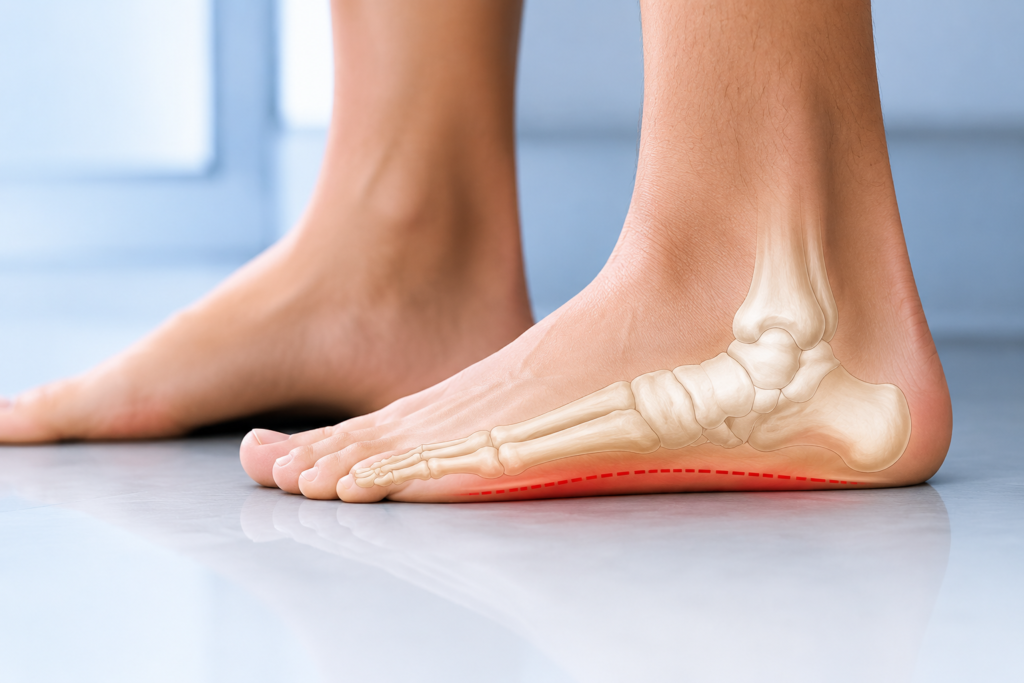
Flat Feet & Flat Foot Deformity
Flat feet, also known as pes planus or flat foot deformity, occur when the natural arch of the foot is lowered or collapses, allowing most or all of the foot to come into contact with the ground. Some people are born with flat feet and never experience symptoms, while others develop pain, fatigue, or changes in the way they walk over time.
Flat feet can affect both children and adults. In children, arches normally develop during the early years of life, although some children continue to have flexible flat feet without problems. In adults, arches may gradually fall because of tendon weakness, ligament strain, arthritis, injury, aging, or other conditions affecting the foot.
Causes of Flat Feet
There are several possible causes and contributing factors, including:
- Genetics
- Aging
- Obesity
- Pregnancy
- Arthritis
- Foot or ankle injuries
- Tendon weakness or damage
- Diabetes
- Neurological or muscular conditions


Different Types of Flat Feet
Not all flat feet are the same. A podiatrist can determine which type you have and whether treatment is necessary.
Flexible Flat Feet:
The arch is visible when sitting or standing on your toes but collapses when weight is placed on the foot.
Rigid Flat Feet:
The arch remains flattened whether you are standing or sitting and may be associated with stiffness or limited motion.
Adult-Acquired Flat Foot
The arch gradually falls later in life, often because of tendon weakness, injury, arthritis, or changes in the supporting structures of the foot.
Congenital Flat Foot:
Some structural conditions are present from birth and may affect the alignment and shape of the foot.
Symptoms of Flat Feet
Many people with flat feet have no symptoms. When problems do occur, they may include:
- Pain in the arch or heel
- Pain along the inside of the ankle
- Foot or leg fatigue
- Ankle discomfort
- Foot stiffness
- Changes in walking or gait
- Feet rolling inward
- Uneven shoe wear
- Toe drift
- Balance problems
- Difficulty standing or walking for extended periods
As the condition progresses, changes in foot alignment may place additional stress on the ankles, knees, hips, and lower back.

Diagnosing and Treating Flat Feet
A podiatric evaluation can determine the type and severity of flat foot deformity. Your podiatrist may examine your feet while sitting, standing, and walking and evaluate your joint motion, muscle strength, foot alignment, and walking pattern. X-rays or other imaging may also be recommended to evaluate the bones and joints.
Treatment depends on your symptoms and the severity of the condition. Many patients can be treated without surgery using custom orthotics, supportive footwear, braces, stretching and strengthening exercises, physical therapy, rest, ice, or anti-inflammatory medication when appropriate.
Custom orthotics can help support the arch, improve foot alignment, redistribute pressure, and reduce stress on the muscles, tendons, and joints. More advanced cases may require additional treatment when pain or deformity continues to progress.
When Should You See a Podiatrist?
If flat feet are causing pain, fatigue, difficulty walking, balance problems, or noticeable changes in the shape of your feet, schedule an evaluation with Godoy Foot & Ankle Center. Early treatment can help reduce discomfort, improve function, and prevent the deformity from becoming more severe.

Wayne Office
- 468 Parish Dr., Suite 4, Wayne, NJ 07470
- Phone: (973) 832-4061
- Fax: (973) 832-4062
- Mon: 9:00am - 5:00pm
- Tues: 8:30am - 5:30pm
- Wed: 8:30am - 3:00pm
- Thur: 8:30am - 3:00pm
- Fri: 8:30am - 4:00pm
- Sat: by appointment only
Oakland Office
- 43 Yawpo Ave., Suite 4 , Oakland, NJ 07436
- Phone: (973) 832-4061
- Fax: (973) 832-4062
- Mon: 10:00am - 5:00pm
- Wed: 10:00am - 5:00pm
Schedule An Appointment
To learn more about treatment options or schedule an appointment with Dr. Johanna Godoy, contact Godoy Foot & Ankle Center today.
Foot Health Tips & Podiatry Insights
Reasons High Heels Can Hurt the Feet
High heels may be fashionable and elegant but often come
A Comprehensive Overview of Athlete’s Foot
Athlete’s foot, a common fungal infection, unfolds as an uncomfortable
What Is a Hammertoe and What to Do About It
A hammertoe is a foot deformity where one or more