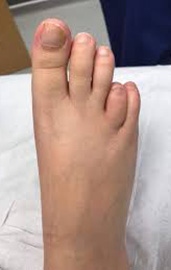
Brachymetatarsia is characterized by a shorter than usual metatarsal bone, one of the five long bones in the feet that end in the toes. This causes one of the toes to be "pulled back" from the rest, or overlap the others. If more than one of the long bones of the foot is affected, it is known as brachymetapody. The disease is often congenital, but can also be caused by an injury to the growth plate of the short toe.
Symptoms and Treatment
If you suffer from brachymetatarsia, you may find it difficult to properly balance or smoothly transfer weight across the toes when walking or running. To correct this problem, extra padding can be used in the shoe to protect the short toe from excessive friction and pressure. Orthotics may also be used to properly distribute the weight across the foot while in motion. A surgical graft of bone to lengthen the short toe may also be an option in some cases.
If you suffer from brachymetatarsia, our podiatry professionals can help you find the right treatment option for you based on your unique situation. Contact us today to learn how we can help you regain a greater sense of balance and a smoother range of motion.
Brachymetatarsia is a congenital condition where one of the metatarsal bones in the foot is abnormally short, leading to a shorter than average toe. This rare condition can affect one or both feet and typically presents with symptoms like pain, discomfort, and cosmetic concerns. Treatment options vary depending on the severity and individual needs, ranging from non-surgical methods like orthotic devices or shoe modifications to surgical procedures such as bone lengthening or bone grafting. Early diagnosis and intervention are important for managing symptoms and preventing complications, allowing individuals with brachymetatarsia to maintain mobility and improve quality of life.
